Scenarios for the future of transport

The UK government established a new horizon-scanning unit in its Office and Science and Technology a few years ago, and this has now issued its first report. This takes a look at likely scenarios for transport infrastructures over the next fifty years, but since transport and communications are so central to our economy these scenarios form a fairly comprehensive look at how new technology might change the way we live. In particular, they cover three big questions about technology and the future:

  • Where will the energy that currently underwrites our lifestyle in the developed world come from?
  • How will we exploit the growing amount of information processing and communication power we will have at our disposal?
  • Will the world carry on its trend to centralisation in manufacturing and energy generation, or will we see a switch to increasingly decentralised modes of production?
  • The web-site has links to lot of excellent material, including many interesting, specially commissioned background papers, but perhaps the most interesting things are the Project overview (54 page PDF), and the Scenarios (89 page PDF). The latter bring the subject to life with four plausible, but highly contrasting, scenarios for how things might turn out.

    The techno-optimist’s scenario is called “Perpetual motion”. Here it’s assumed that technology has managed to overcome the problems of sustainable energy with some combination of the hydrogen economy, nuclear fuels, coal and carbon sequestration. Everything and everyone is plugged in to the information grid, and the major problem the world faces is workplace stress. There’s a green nirvana too: “Urban colonies” imagines a future of sustainable urbanisation, where personal transport is discouraged by heavy taxation. Energy comes from microgrids, there is universal recycling and reuse. People are prosperous, but the economy revolves around fewer goods and more services. Iin short, it’s a vision of the future in which everywhere looks like Copenhagen, rather than Seoul. But, on the principle that the statistically most accurate way of predicting the weather tomorrow is to look out of the window today, what is considered the most likely scenario is called “Good intentions”. This is a world in which hard decisions have been put off until too late. Transport is both highly congested and highly priced; there’s been some progress with biofuels but accelerating climate change is leading to increasingly frequent weather disasters. Both prosperity and personal freedom are compromised.

    Techno-optimists think that the accelerating pace of technological advances will determine how the world changes, while green-tinged social liberals believe that the future can be deliberately shaped by human, democratic values. There is a third, much uglier, possibility; that we will be unable to prevail over overwhelming societal strains imposed by external shocks. This is the world of the most pessimistic scenario, “Tribal trading”. Here an early end to the era of cheap energy has stripped the veneer from our globalised world. A decline in oil production has led to spiralling oil prices. Economic depression has ended with the near-complete collapse of world and national financial systems, with resource wars and environmental disasters adding to the gloom. It’s a world of walls and borders and vegetable gardens, in which the 90’s experience of Cuba offers some of the best coping strategies. Some technology survives, and with travel over even modest distances prohibitively difficult and expensive, robust communications are more important than ever. For advice, we’re directed to the poet Gary Snyder:

    “What is to be done? Learn to be more self-reliant, reduce your desires, and take care of yourself and your family”.

    Pitching to Intel

    There was some mockery of Apple in nanotech circles for branding their latest MP3 player the iPod Nano, merely, it seemed, because it was impressively thin (at least compared to my own much-loved first generation model). Rationalisations that its solid state memory was made with a 65 nm process didn’t seem to cut much ice with the sceptics. Nonetheless, what feels superficially obvious, that microelectronics companies are deeply involved with nanotechnology, both in their current products, and in their plans for the future, really is true.

    This was made clear to me yesterday; I was in Newcastle, at a small meeting put together by the regional technology transfer organisation CENAMPS, in which nano academics from some northern UK Universities were pitching their intellectual wares to a delegation from Intel. Discussion ranged from near term materials science to the further reaches of quantum computing and new neuroscience-inspired, adaptive and multiply connected paradigms for computing without software.

    The research needs of Intel, and other microelectronics companies, are made pretty clear by the International Semiconductor Technology Roadmap. In the near-term, what seem on the surface to be merely incremental improvements in reducing critical dimensions need to be underwritten by simultaneous improvements in all kinds of unglamorous but vital materials, like dielectrics, resists, and glues. Even to achieve their current performance, these materials are already pretty sophisticated, and to deliver ever-more demanding requirements for properties like dielectric constant and thermal expansivity will rely even more on the nanoscale control of structure of these materials. Much of this activity takes place under the radar of casual observers, because it consists of business-to-business transactions in unglamorous sounding sectors like chemicals and adhesives, but the volumes, values (and margins) are pretty substantial . Meanwhile, as their products shrink, these companies are huge and demanding consumers of nanometrology products.

    In the medium term, to keep Moore’s law on track is going to demand that CMOS gets a radical makeover. Carbon nanotube transistors are a serious possibility – they’re now in the road-map – but the obstacles to integrating them in large-scale systems are formidable, and we’re only talking about a window of ten years or so to do this. And then, beyond 2020, we need to go quite beyond CMOS to something quite revolutionary, like molecular electronics or quantum computing. This is a daunting prospect, given that these technologies barely exist in the lab.

    And what will be the societal and economic forces driving the development of nano-electronics twenty years out? Now, it’s the need to sell every teenager an MP3 player and a digital camera. Tomorrow, it’s going to be the end of broadcast television, and putting video-on-demand systems into every family home. By 2025, it’s most likely going to be the need to keep the ageing baby boomers out old peoples homes and hospitals and able to live independently. Robotics equipped with something much closer to real intelligence, ubiquitous sensing and continuous medical monitoring look like good bets to me.

    Grey Goo won’t get you across the Valley of Death

    The UK’s main funder of academic nanoscience and nanotechnology – the Engineering and Physical Science Research Council (EPSRC) – has published a report of a review of its nanotechnology portfolio held last summer. The report – released in a very low key way last November – is rather critical of the UK’s nanotechnology performance, noting that it falls below what the UK would hope for both in quality and in quantity, and recommends an urgent review of the EPSRC’s strategy in this area. This review is just getting under way (and I’m one of the academics on the working party).

    Unlike many other countries, there is no dedicated nanotechnology program in the UK (the Department of Trade and Industry does have a program in micro- and nano- technology, but this is very near-term and focused on current markets and applications) . With the exception of two (small scale, by international comparisons) nanotechnology centres, at Oxford and Cambridge, nanoscience and nanotechnology proposals are judged in competition with other proposals in physics, chemistry and materials science. There’s no earmarked funding for nanotechnology, and the amount of funding given to the area is simply the aggregate of lots of decisions on individual proposals. This means, of course, that even estimating the total size of the UK’s nanotechnology spend is a difficult task that depends on a grant-by-grant judgement of what is nanotechnology and what is not.

    This situation isn’t entirely bad; it probably means that the UK has been less affected by the worst excesses of academic nanohype than countries in which funding has been much more directly tied to the nanotechnology brand. But it does mean that the UK’s research in this area has lacked focus, it’s been developed without any long term strategy, and there’s been very little attempt to build research capacity in the area. Now is probably not a bad time to look ahead at where the interesting opportunities in nanotechnology will be, not next year, but in ten to fifteen years time, and try refocus academic nanoscience in a way that will create those longer term opportunities.

    One of the perceptions mentioned in the report was that the quality of work was rather patchy, particularly in areas like nanomaterials, with some work of very moderate quality being done. One panelist on the theme day review memorably called this sort of research “grey goo” – work that is neither particularly exciting scientifically, but which, despite its apparent applied quality, isn’t particularly likely to be commercialised either. Everyone in government is concerned about the so-called “valley of death” – that trough in the cycle of commercialisation of a good idea which comes after the basic research has been done, but when products and revenues still seem a long way off. Much government intervention aims to get good ideas across this melodramatically named rift, but this carries a real danger. Clearly, funding high quality basic science doesn’t help you here, but there’s a horribly tempting false syllogism – that if a proposal isn’t interesting fundamental science, then it might be just the sort of innovative applied research that gets the good ideas closer to market. Well, it might be, but it’s probably more likely simply to be mediocre “sort-of-applied” work that will never yield a commercial product – it might be “grey goo”. I don’t think this is solely a UK problem – in my view every funding agency should ask themselves: ‘are we funding “grey goo” in a doomed attempt to get across the “valley of death”?’

    Throbbing gels

    This month’s edition of Nano Letters includes a paper from our Sheffield soft nanotechnology group (Jon Howse did most of the work, assisted by chemists Colin Crook and Paul Topham and beam line scientists Anthony Gleeson and Wim Bras, with me and Tony Ryan providing inspiration and/or interference) demonstrating the direct conversion of chemical energy to mechanical energy at the single molecule level. This is a development of the line of work I described here. Our idea is to combine a macromolecule which changes size in response to a change in the acidity of its surroundings with a chemical reaction which spontaneously leads to an oscillation in the acidity, to get a cyclic change in size of the polymer molecule. The work is summarised in a piece on nanotechweb.org.

    Nanotechnologies, public engagement and the policy makers

    I was in London on Monday, making a brief appearance before the Nanotechnology Issues Dialogue Group. This is the UK government committee that brings together officials from all Government departments with an interest in nanotechnology, to coordinate the government’s response to the issues raised by the Royal Society report. I was there to talk about the work of Nanotechnology Engagement Group, a body funded by the government’s Office of Science and Technology and run by the NGO Involve.

    The role of the NEG is essentially to carry out a rolling meta-study of public engagement exercises around nanotechnology in the UK and elsewhere; I’m chairing it and together with project director Richard Wilson we were giving the government officials a bit of a preview of our first report, which will be published in a month or so. I’ll wait until the report is out before saying much about it, but in the spirit of open government I’m sure the officials won’t mind me reproducing the pictorial record of the meeting below.

    and when did you last see your father?
    Richard Jones attempts to persuade the government officials of the Nanotechnology Issues Dialogue Group of the importance of public engagement.

    On Nanohype

    David Berube’s new book on nanotechnology, Nanohype, is reviewed in this week’s Nature (subscription required). The review is, in truth, not very favourable, but I’m not going to comment on that until my own copy of Nanohype makes it from the Amazon warehouse across the Atlantic. As is often the case, though, the major message of the review is that this is not the book that the reviewer would have written, which in this case is rather interesting, as the reviewer was Harry Collins, one of the foremost exponents of the discipline of the sociology of science.

    Collins’s research method is in-depth studies of scientific communities, in which he attempts to uncover the often tacit shared values that underly the scientific enterprise. As such, he is rather sceptical about the value of written material: “science is an oral culture. Although science’s spokespersons rattle on endlessly about peer review, the vast majority of published papers, peer reviewed or not, are largely ignored by scientists in the field. The problem that would face an alien from another planet who wanted to make a digest of terrestrial science from the literature alone would be about as bad as that facing a lay person who tries to understand it by reading everything on the Internet.”

    Here’s why nanotechnology is interesting – as a scientific culture it barely exists yet. In contrast to the fields that Collins has studied – most recently, the search for gravitational waves – the idea of nanotechnology as a field has been imposed from the outside the scientific community, by the forces which I imagine Berube’s book documents, rather than emerging from within it. So the community shared values that Collins’s work aims to uncover are not yet even agreed upon.

    For those readers who are sceptical about the very idea of the sociology of science, the BBC is currently broadcasting a pair of very interesting documentaries about how science works, called Under Laboratory Conditions; the first one, broadcast last Wednesday on the BBCs digital service BBC4, rang very true to me (and I say this not just because I made a brief appearance in the program myself).

    Writing the history of the nanobot

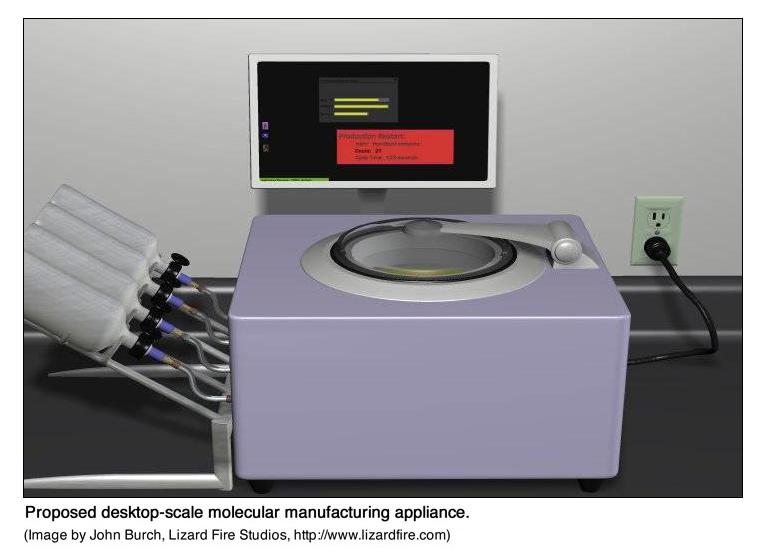
    The nanobot – the tiny submarine gliding through the bloodstream curing all our ills – is one of the most powerful images underlying the public perception of nanotechnology. In the newspapers, it seems compulsory to illustrate any article about any sort of nanotechnology with a fanciful picture of a nanobot and a Fantastic Voyage reference. Yet, to say that nanoscientists are ambivalent about these images is putting it mildly. Amongst the more sober nanobusiness and nanoscience types, the word nanobot is shorthand for everything they despise about the science fiction visions that nanotechnology has attracted. For my own part, I’ve argued that the popular notions of the nanobot are an embodiment of the fallacy that advanced nanotechnology will look like conventional engineering shrunk in size. And even followers of Drexler, in an attempt to head off fears of the grey goo dystopia of out-of-control self-replicating nanobots, have taken to downplaying their importance and arguing that their brand of advanced nanotechnology will take the form of innocent desktop devices looking rather like domestic bread-making machines.

    The power of the nanobot image in the history of nanotechnology is emphasized by a recent article by a social scientist from the University of Nottingham, Brigitte Nerlich. This article, From Nautilus to Nanobo(a)ts: The Visual Construction of Nanoscience traces the evolution of the nanobot image from its antecendents in science fiction, going back to Jules Verne, through Fantastic Voyage, right through to those stupid nanobot images that irk scientists so much. Nerlich argues that ” popular culture and imagination do not simply follow and reflect science. Rather, they are a critical part of the process of developing science and technology; they can inspire or, indeed, discourage researchers to turn what is thinkable into new technologies and they can frame the ways in which the ‘public’ reacts to scientific innovations.”

    Attempts to write the nanobot out of the history of nanotechnology thus seem doomed, so we had better try and rehabilitate the concept. If we accept that the shrunken submarine image is hopelessly misleading, how can we replace it by something more realistic?

    Let’s prevail

    Martyn Amos draws our attention to the collection of dangerous ideas on The Edge – the website of every popular science writer’s favourite literary agent, John Brockman. He asked a collection of writer-scientists to nominate their dangerous idea for 2006, and the result has something for everyone. Like Martyn, I very much like Lynn Margulis’s comments about the bacterial origins of our sensory perceptions. I’d want to go further, with the statement that human brains have more in common with colonies of social bacteria than with microprocessors.

    Devotees of the nanobot have Ray Kurzweil arguing that radical life extension and expansion, enabled by radical nanotechnology, is as inevitable as it is desirable. The apparent problems of overpopulation will be overcome because “molecular nanoassembly devices will be able to manufacture a wide range of products, just about everything we need, with inexpensive tabletop devices. “ Readers of Soft Machines will already know why I think Drexlerian nanotechnology isn’t going to lead us to this particular cornucopia. To my mind, though, the biggest danger of radical life extension isn’t overpopulation; it’s stagnation and boredom. Every generation has needed its angry young men and women, its punk rockers, to spark its creativity, and even as I grow older the thought of the world being run by a gerontocracy doesn’t cheer me up.

    So I’m with Joel Garreau, in hoping that despite environmental challenges and the frightening speed of technological change, we’ll see “the ragged human convoy of divergent perceptions, piqued honor, posturing, insecurity and humor once again wending its way to glory”. In the nice phrase Garreau used in his book Radical Evolution – let’s prevail.

    At the year’s turning

    All the best to Soft Machines readers for the New Year, and warm congratulations to my collaborator and friend Tony Ryan, Professor of Chemistry at Sheffield University, who was awarded an OBE for services to science in the Queen’s New Year’s Honours. For those readers unfamiliar with the intricacies of the British honours system, that means he’s been made an Officer of the Order of the British Empire. Yes, I know, Britain hasn’t got an empire any more, but the whole point of chivalry is to be archaic…

    Eat up your buckyballs (for your liver’s sake)

    The discovery by Eva Oberdorster that the molecule C60, or buckminster fullerene, caused brain damage in large mouthed bass received huge publicity when it was first reported, (see here for a relatively level-headed account). This work has now become one of the main underpinning texts of the belief that there is something uniquely dangerous about nanomaterials. It’s interesting, though perhaps not surprising, that a recent article in the American Chemical Society journal Nano Letters, which reaches an exactly opposite conclusion, (abstract, subscription required for full article) has received no publicity at all.

    In this work, from Fathi Moussa’s group in the Department of Pharmacy in Université Paris XI, it is shown that not only did C60 not have a toxic effect on the rats and mice it was tested on; it also protected rat’s livers from the toxic effects of carbon tetrachloride, an effect ascribed to C60’s powerful anti-oxidant properties. The paper is not reticent in its criticism of the earlier work; it ascribes the apparent toxic effects previously observed to the fact that the C60 was prepared in an organic solvent, THF, which was not completely removed when a water-suspension of C60 was prepared. In short, it was the toxic effects of THF that were affecting the unfortunate fish, not those of C60. The tone of these comments is suprisingly caustic for a peer reviewed paper, and it finishes with a note of magnificent Gallic sarcasm. Referring to reports that naturally occurring fullerenes (presumably from the soot from forest fires) have been discovered in fossil dinosaur eggs, the authors ask “we feel that it cannot be said that the C60 discovered in dinosaur eggs was the origin of the mass extinction of these animals, or was it?”

    I should stress that I’m not advocating that Soft Machines readers should immediately consume a large quantity of C60 and then start abusing solvents, nor should we now assume that fullerenes are entirely safe and without potential environmental problems. But there are a couple of lessons we should draw from this. Firstly, toxicology is not necessarily easy to get right. But perhaps the most important lesson is that learning about science from press releases is very misleading. What appear to be the big breakthroughs at the time get lots of coverage, but the follow-up work, which can modify or even completely contradict the initial big story, barely gets noticed.